
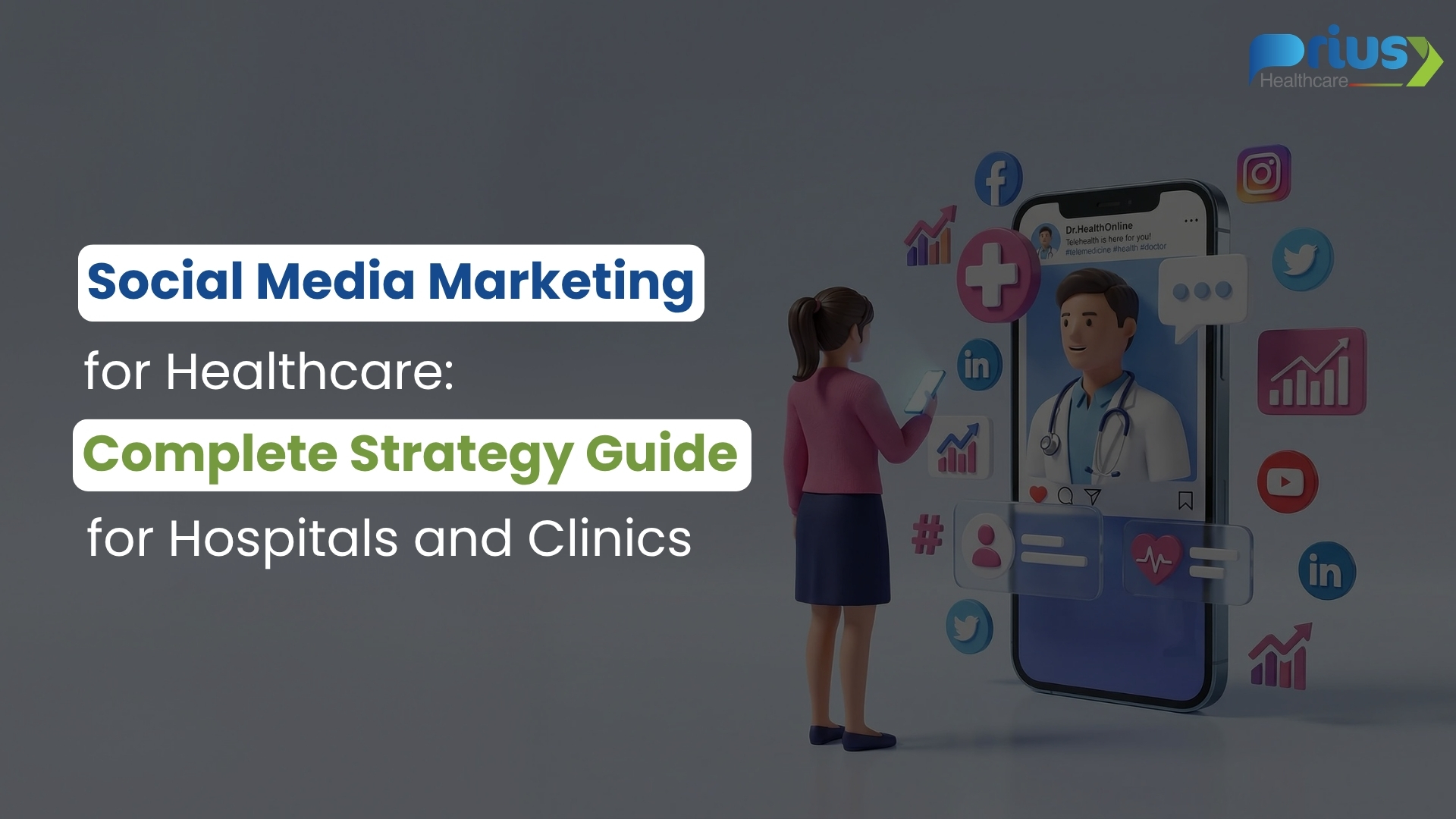
Social Media Marketing for Healthcare: Complete Strategy Guide for Hospitals and Clinics
In today’s digital-first world, patients no longer depend only on word-of-mouth or physical visits to understand a hospital, clinic, doctor, or healthcare service. Before booking an appointment, many people search online, check reviews, watch health videos, compare specialists, and look at social media pages to understand the credibility of a healthcare provider.
That is why social media marketing for healthcare has become an important part of building trust, awareness, patient education, and digital visibility. For hospitals and healthcare brands, social media is not just about posting creatives; it is about communicating responsibly, educating people, and creating a consistent brand presence that patients can trust.
Why Healthcare Brands Cannot Ignore Digital Trust
Healthcare is a high-trust category. A patient does not make a decision only because of an attractive post or a promotional offer. They look for expertise, clarity, empathy, patient experience, doctor credibility, and reassurance. If a hospital’s social media presence is inconsistent, outdated, over-promotional, or poorly designed, it can affect how people perceive the brand.
India’s digital audience is growing rapidly, with hundreds of millions of internet and social media users. This means that patients and caregivers are already online, searching for symptoms, treatments, doctors, hospital facilities, recovery stories, and preventive health information. The challenge for healthcare providers is to ensure that their communication is accurate, simple, ethical, and patient-friendly.
Without social media marketing for healthcare, many hospitals miss the opportunity to guide patients at the right time with the right information.
The Real Gap: Posting Is Not the Same as Strategy
Many healthcare brands post regularly but still do not see meaningful engagement or patient trust. The reason is simple: random posting does not create brand authority. A strong healthcare social media plan needs structure, audience understanding, content pillars, doctor-led education, platform-specific formats, and performance tracking.
For example, a cardiology post should not only say “Visit our hospital for heart care.” It should explain warning signs, risk factors, prevention tips, when to consult a doctor, and how timely diagnosis can help. Similarly, a maternity hospital should not only promote delivery packages but also educate mothers about pregnancy care, high-risk symptoms, nutrition, and postnatal support.
Patients engage with content that answers their doubts, reduces fear, and helps them make informed healthcare decisions.
A Smarter Content Approach for Healthcare Pages
A strong social media marketing for healthcare plan should balance education, credibility, awareness, community connection, and service information. The content should not feel like direct selling. Instead, it should feel useful, reassuring, and medically responsible.
Healthcare content can be divided into key content buckets such as doctor awareness videos, patient education posts, myth-busting reels, health day campaigns, facility highlights, preventive care tips, patient journey stories, FAQs, and community initiatives. This approach helps the audience understand both the medical expertise and the human side of the brand.
The content should also be simple enough for patients to understand. Medical jargon should be avoided unless explained clearly. The tone should be empathetic, factual, and responsible.
Platform-Wise Strategy That Works
Each platform has a different role in healthcare communication. Instagram is useful for reels, visual storytelling, doctor videos, patient awareness, and quick health tips. Facebook works well for local communities, hospital updates, event posts, patient education, and awareness campaigns. LinkedIn is important for leadership visibility, doctor achievements, healthcare innovation, institutional updates, and brand credibility. YouTube can help with long-form doctor explainers, patient education videos, interviews, and health awareness series.
For hospitals, Google Business Profile also plays an important role. Reviews, photos, service updates, location information, and timely responses can influence patient decisions. A well-maintained GMB profile supports local discovery and builds confidence among people searching for nearby healthcare services.
Random Posting vs Intent-Based Healthcare Marketing
A random posting approach focuses only on filling the calendar. It may include festival posts, generic awareness creatives, doctor photos, and service promotions without a clear objective. This may keep the page active, but it does not always build patient trust or generate meaningful engagement.
An intent-based approach is different. It studies what patients are searching for and creates content around real healthcare concerns. For example, people may search for “when to see a neurologist,” “early signs of stroke,” “best maternity hospital near me,” or “knee replacement recovery time.” Content built around such questions performs better because it meets the patient’s actual need.
This is where healthcare marketing becomes more useful, relevant, and patient-centric.
Key Strategies for Healthcare Social Media Success
The first strategy is to build doctor-led content. Doctors are the biggest trust builders in healthcare. Short videos, expert tips, myth-busting content, and simple explainers can make medical communication more credible.
The second strategy is to use patient education as the core content pillar. Hospitals should focus on symptoms, prevention, diagnosis, treatment options, recovery, and lifestyle guidance.
The third strategy is to maintain visual consistency. Healthcare pages should look clean, professional, and easy to read. Over-texted creatives, low-quality images, and inconsistent branding can reduce trust.
The fourth strategy is to use local language and local relevance. For regional hospitals, Hindi, Hinglish, Kannada, Marathi, Tamil, Telugu, or other local languages can improve reach and relatability.
The fifth strategy is to track performance. Reach, engagement, saves, shares, video views, profile visits, appointment clicks, and enquiry patterns should be reviewed regularly.
How Healthcare Brands Benefit from a Strong Digital Presence
A structured digital presence helps hospitals build trust before the patient even visits the facility. It improves visibility, supports patient education, strengthens doctor credibility, improves local recall, and creates a consistent brand image.
It also helps hospitals communicate during important health days, awareness months, community events, medical camps, new department launches, and doctor achievements. Over time, this creates a stronger connection with patients and caregivers.
Most importantly, ethical healthcare communication can help reduce confusion caused by misinformation. Since health-related misinformation spreads quickly online, hospitals and doctors have an important role in sharing verified, responsible, and easy-to-understand information.
Why Prius Healthcare Is the Right Partner for Healthcare Brands
Prius Healthcare understands that healthcare communication needs more sensitivity, accuracy, and trust than regular brand marketing. The team works closely with hospitals, doctors, clinics, diagnostics brands, and healthcare organisations to create communication that is strategic, medically responsible, and patient-focused.
From content calendars and doctor-led reels to hospital campaigns, health awareness posts, PR integration, online reputation management, GMB hygiene, and platform-wise strategy, Prius Healthcare helps brands build a stronger digital presence.
With experience across healthcare PR, digital marketing, hospital communication, patient awareness campaigns, and leadership visibility, Prius Healthcare creates content that is not only creative but also credible.
For brands looking to build patient trust, improve digital visibility, and communicate responsibly, social media marketing for healthcare becomes a long-term growth and reputation tool.
F.A.Q (Frequently Asked Question)
Why is social media important for hospitals and clinics?
Social media helps hospitals and clinics educate patients, build trust, improve visibility, share doctor expertise, promote preventive health awareness, and connect with local communities.
How often should a healthcare brand post on social media?
A healthcare brand should maintain a consistent posting schedule. Depending on the hospital’s goals, 12 to 20 posts per month with reels, static posts, carousels, and stories can help maintain visibility.
Should doctors be featured in hospital social media content?
Yes. Doctor-led content builds credibility and trust. Patients are more likely to engage with content where doctors explain symptoms, prevention, treatment options, and common health concerns in simple language.
What type of content works best for healthcare brands?
Doctor videos, health tips, symptom awareness posts, myth-busting reels, patient education content, FAQs, hospital updates, health day campaigns, and community initiative posts work well for healthcare brands.
Can social media help generate patient enquiries?
Yes, but only when the strategy is clear. Educational content, local targeting, Google Business Profile hygiene, paid campaigns, and strong call-to-action planning can help improve patient enquiries.
Why should brands avoid overly promotional content?
Healthcare is a sensitive category. Overly promotional content can reduce trust. Patients respond better to helpful, factual, empathetic, and medically responsible communication.
Build a Stronger Healthcare Brand with Prius Healthcare
Healthcare decisions are personal, emotional, and trust-driven. A hospital’s social media presence should reflect expertise, empathy, responsibility, and consistency. It should educate patients, guide families, support doctors, and strengthen the brand’s reputation in a meaningful way.
With the right social media marketing for healthcare strategy, hospitals and clinics can move beyond basic posting and build a digital ecosystem that supports awareness, trust, engagement, and long-term patient relationships.
Read More Blogs
Hospital Digital Marketing: A Step-by-Step Growth Blueprint for More Patient Enquiries
August 7, 2026 | by Admin-PriusHealth
Read More →
Healthcare SEO: The Complete Guide to Ranking Hospitals & Clinics on Google
August 6, 2026 | by Admin-PriusHealth
Read More →
Contact Us
Let's Connect
Get Your Complimentary Healthcare Growth Blueprint
Ready to see how our strategies can apply to your brand?
Let our senior strategists conduct a confidential analysis of your current market position, digital footprint, and competitive landscape.
One strategic partner for digital marketing, PR, branding, and performance—built exclusively for healthcare.
# Most Awarded Digital Healthcare Marketing Agency
Contact Us
Corporate Office : L-11, Basement, near Sewa Bhawan, South Extension II, Block L, New Delhi
Other Offices : Jaipur, Lucknow, Kolkata, Ahmedabad, Mumbai, Bengaluru, Hyderabad, Chennai, Chandigarh, Bhopal, Guwahatai
Other Offices : Jaipur, Lucknow, Kolkata, Ahmedabad, Mumbai, Bengaluru, Hyderabad, Chennai, Chandigarh, Bhopal, Guwahatai
© 2026 Prius Healthcare. A division of Prius Communications. All Rights Reserved.